Low Humidity Impact on Dispersion Barrier Coating Fold Integrity
Low relative humidity embrittles paperboard and dispersion coatings, causing fold micro-cracks that degrade barrier integrity unless creasing geometry adapts.
Polymer
Water-based dispersion barrier coatings form a film as latex particles coalesce into a continuous protective layer over paperboard fibres. As water evaporates, spherical polymer particles deform under capillary pressure into a close-packed bed that fuses into a non-porous barrier. The mechanical flexibility of this film depends heavily on ambient relative humidity, where absorbed moisture acts as a secondary plasticizer.
Low humidity reduces plasticization, raising the glass transition temperature and restricting molecular mobility in the binder phase.
Coalescence Mechanics and Glass Transition Shifts
Dry ambient air alters the equilibrium plasticization of synthetic and bio-based binder matrices. Atmospheric relative humidity below thirty-five percent removes bound water from hydrophilic groups in acrylic, styrene-butadiene, and polyhydroxyalkanoate structures, causing polymer molecules to lose flexibility rapidly. As relative humidity drops from fifty percent down to fifteen percent, the effective glass transition temperature of a typical aqueous acrylic dispersion coating increases by six to twelve degrees Celsius, converting an otherwise ductile barrier into a brittle film at standard converting plant temperatures.
As dry air embrittles paperboard fibres and lowers film strain limits, operating near or below the shifted glass transition temperature causes forced mechanical bending to generate internal tensile stresses that exceed the ultimate tensile strength of the dry dispersion matrix. Latex particle boundaries that appeared fully coalesced under standard test conditions serve as initiation points for micro-structural failure under low-moisture stress.
A dry dispersion layer subjected to fifteen percent relative humidity loses up to sixty percent of its elongation capacity compared to standard test conditions at fifty percent relative humidity.
Elongation Limits across Relative Humidity Gradients
Tensile capability in thin protective films degrades rapidly when environmental moisture falls below standard laboratory levels. Standard testing under ISO 187 evaluates sheet performance at twenty-three degrees Celsius and fifty percent relative humidity. Converting facilities operating in cold climates during winter months frequently experience indoor relative humidity levels between fifteen and twenty-five percent.
This moisture deficit causes rapid drying across both the dispersion layer and the underlying cellulosic substrate, altering strain distribution during creasing and folding operations.
| Humidity Level (% RH) | Equilibrium Moisture (%) | Glass Transition Temp (°C) | Tensile Elongation at Break (%) | Barrier Fracture Threshold Strain (%) |
|---|---|---|---|---|
| 50 | 6.8 | 14.2 | 185 | 8.5 |
| 40 | 5.6 | 16.8 | 142 | 6.8 |
| 30 | 4.3 | 19.5 | 98 | 4.9 |
| 20 | 3.1 | 22.1 | 62 | 3.2 |
| 15 | 2.4 | 24.6 | 41 | 2.1 |
Micro-cracking during dry winter converting can stem from machine mechanical settings rather than film desiccation alone.
Crease
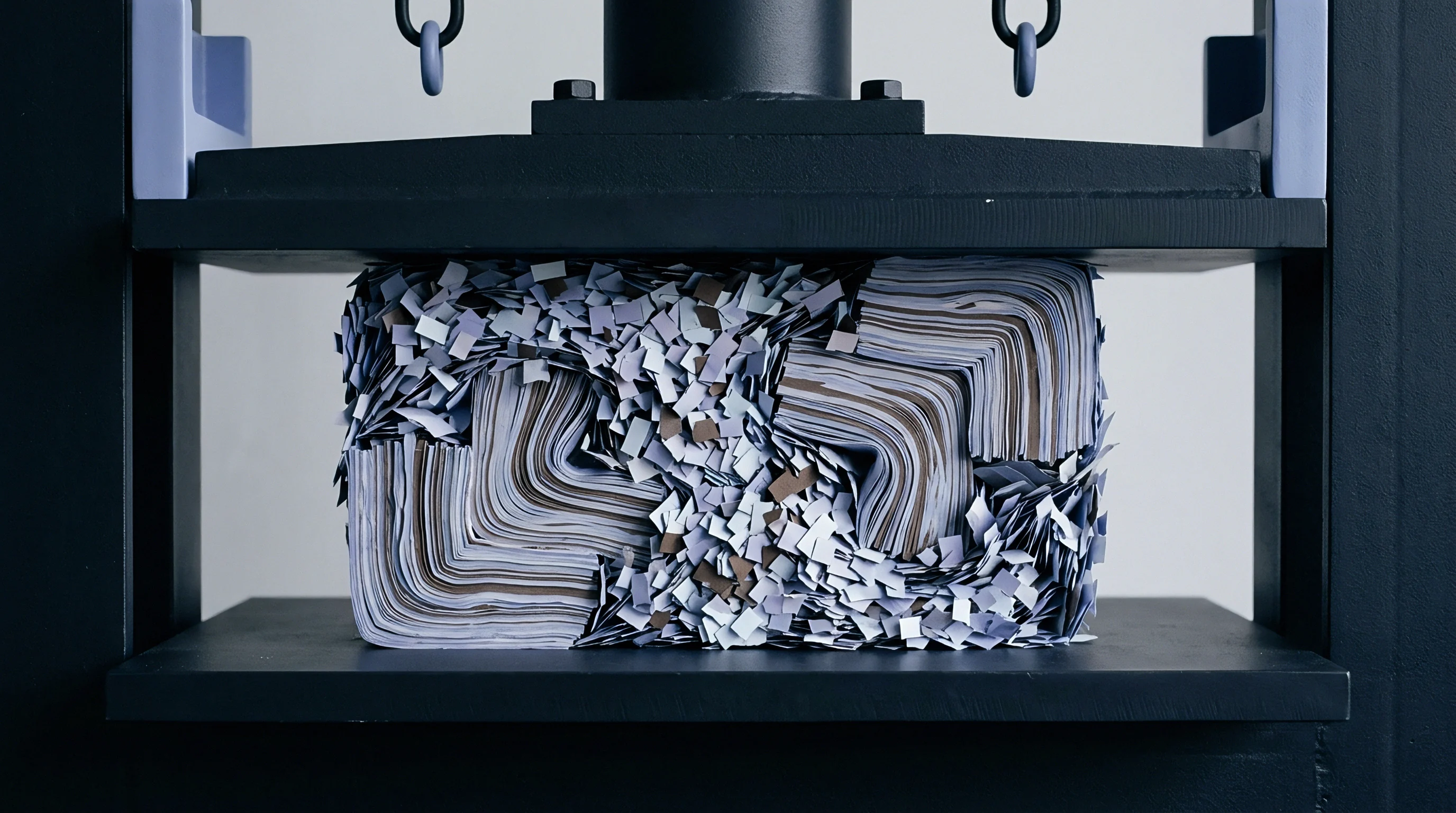
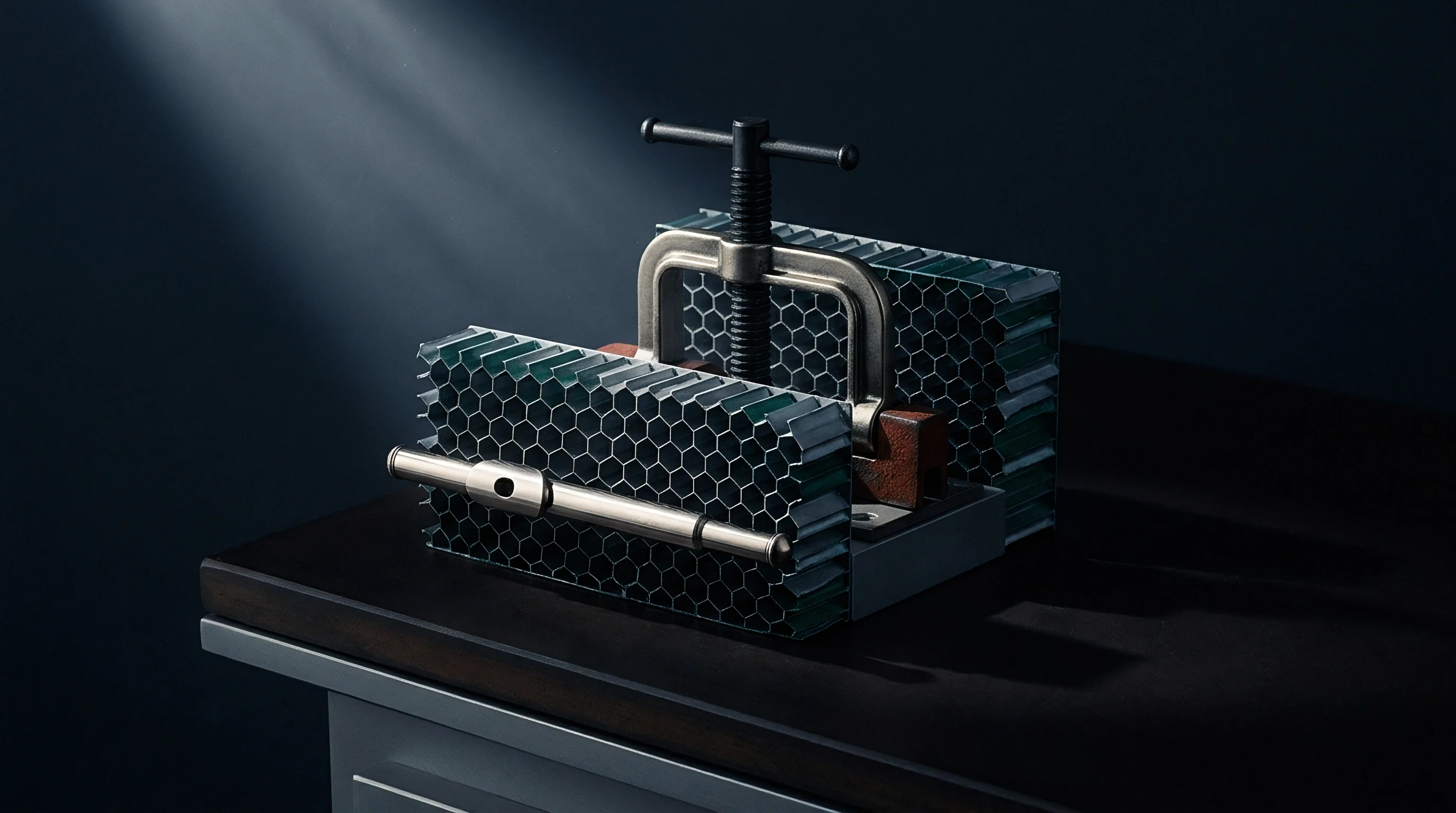
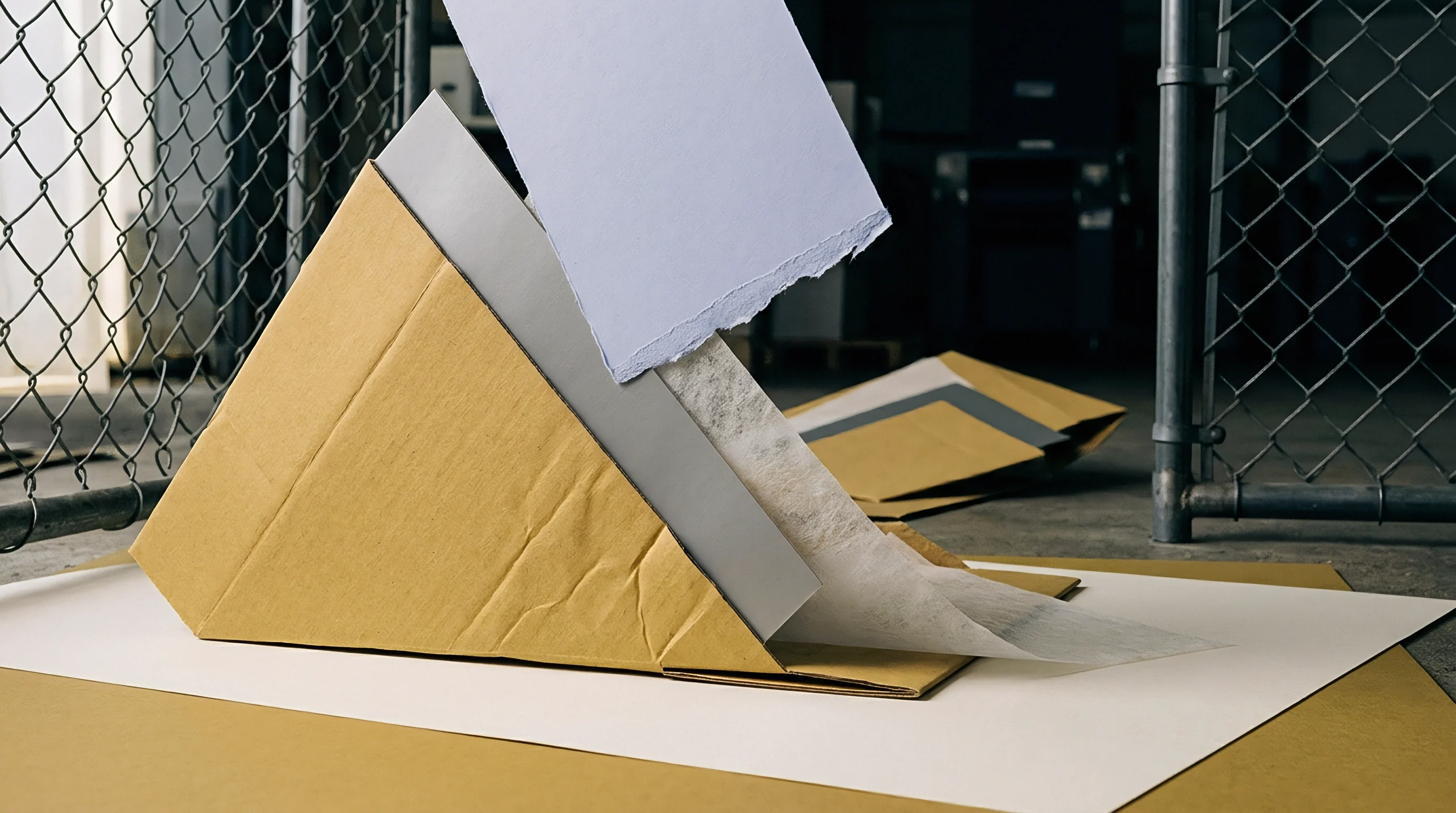
Scoring lines on paperboard establish controlled deformation zones that allow crisp folding without delaminating the base sheet. A steel creasing rule pushes the board into a female die channel, creating a localized internal rupture in the central z-direction plies while keeping outer linerboard layers intact. Under low ambient humidity, lost moisture impairs cellulose fibre pliability and increases sheet stiffness, altering the structural shear resistance of the multi-ply board.
As a result, the top linerboard ply exhibits reduced strain capacity, transferring excess bending tension directly into the applied dispersion layer.
Board Substrate Brittle Failure Dynamics
Cellulose fibers contract and lose internal viscoelastic compliance as relative humidity drops toward twenty percent. In dry environments, equilibrium moisture content in solid bleached sulfate and folding boxboard substrates falls from seven percent to under three percent. These desiccated sheet structures exhibit higher bending stiffness and lower z-directional delamination compliance.
During female groove penetration, the dry bottom plies resist shear displacement, forcing the upper linerboard and dispersion film to absorb concentrated tensile stress over a tighter bending radius.
When the scoring rule strikes desiccated board, localized stress concentrates along score lines without sufficient internal delamination to form a smooth hinge. The resulting bending energy focuses on the outer surface, causing parallel micro-fractures through the dispersion layer along the score line axis that ruin liquid barrier performance.
Delamination and Micro-Fracture Progression
Force localization during mechanical rule impression concentrates stress directly within the thin barrier layer. Micro-fractures form during the initial scoring stroke and widen significantly when the carton blank undergoes its final ninety or one hundred and eighty degree fold on automated packaging machinery.
- Top-coat shear splitting manifests along the outer radius of the scoring line where elongation demands exceed the dry polymer strain limit.
- Base sheet fibre bursting occurs when dry raw board suffers tensile rupture in the outer liner board during female groove impression.
- Pinhole cluster formation emerges at the hinge center where localized tensile stress tears the coalesced dispersion matrix without visual board cracking.
- Interface delamination develops when differential shrinkage stresses between paper fibres and the aqueous coating destroy interfacial adhesion.
Specification contracts governing barrier board shipments routinely mandate conditioning to ISO 187 prior to crease verification testing to prevent improper lot rejections.
Ignoring relative humidity shifts during folding leads to barrier failure on production lines, resulting in leaking liquid cartons and premature shelf-life failure.
Strain
Mechanical deformation during box blank erection subjects protective coatings to combined bending and tensile forces. The strain imposed on the outer surface of a folded paperboard edge depends on total sheet caliper, crease geometry, and fold angle. Folding a three hundred micrometer board one hundred and eighty degrees shifts the neutral axis, pulling the outer polymer skin to localized elongation values between four and eight percent.
When low humidity depresses the coating’s elongation limit below these levels, the barrier film ruptures.

Mechanisms of Micro-Cracking under Ambient Desiccation
Thermal and moisture gradients across the coated sheet generate internal elastic mismatch forces during rapid fold execution. As paperboard moisture drops, the modulus of elasticity of the base board rises while the coating becomes stiff and unyielding. High-speed folder-gluers fold blanks at speeds exceeding three hundred meters per minute, subjecting the desiccated coating to high strain rates.
Under rapid deformation, polymer chains cannot undergo viscoelastic relaxation, causing brittle fracture along surface flaws.
When high strain rates combine with low moisture content, the dispersion layer cracks along the outer edge of the fold line, creating pathways for water, oil, and gas penetration. Proper score geometry helps mitigate cracking, while dye stains are required to reveal invisible micro-fractures.
Permeability Degraded by Microscopic Ruptures
Water vapor transmission rates spike exponentially once continuous matrices suffer surface discontinuities. Liquid water absorption tests show a similar drop in barrier performance when board is creased under dry conditions. Cobb 1800 values measuring below five grams per square meter on flat stock can exceed forty grams per square meter across dry score lines, compromising the protection required for frozen food and chilled liquid packaging.
| Test Atmosphere | Cobb Water Absorption (g/m² 1800s) | Kit Grease Rating | Water Vapor Transmission Rate (g/m²/day) | Pinhole Count per Meter |
|---|---|---|---|---|
| 23°C / 50% RH (Flat Stock) | 2.1 | 12 | 1.2 | 0 |
| 23°C / 50% RH (Creased Fold) | 3.8 | 11 | 2.4 | 1 |
| 23°C / 30% RH (Creased Fold) | 14.5 | 7 | 12.8 | 14 |
| 23°C / 15% RH (Creased Fold) | 42.0 | 3 | 38.5 | 52 |
The exact molecular threshold where bio-based dispersion binders transition from ductile yield to brittle rupture under high-speed scoring remains under active industrial study.
Storage
Warehousing raw paperboard reels and die-cut blanks in unconditioned spaces exposes material to seasonal drops in ambient humidity. Reels stored in cold warehouses during winter chill thoroughly; when moved directly into warm plant environments with low ambient humidity, their outer edges rapidly lose moisture to the dry air, creating non-uniform moisture profiles across the web.
Reel Dehydration and Equilibrium Moisture Loss
Hydration shifts rapidly from outer packaging layers into dry surrounding air during winter warehousing, causing unwrapped board to desiccate and warp. A paperboard roll kept at fifteen percent relative humidity develops tight edges because the outer web wraps contract in length and width while the core retains higher moisture. These tight edges generate uneven web tension on coating and scoring lines, causing misaligned creasing rule impressions and unequal strain across the folder-gluer.
Pallets stored in dry winter ambient air lose edge moisture rapidly, causing tight edges and scoring line cracking during folding carton conversion.
Acclimatization Protocols for Converting Floors
Board stock should remain sealed inside moisture-barrier wrapping until pallets match pressroom temperature, as cold weather reduces factory humidity. Opening protective stretch film prematurely in a dry plant causes rapid surface desiccation on the top blanks of a stack.
- Measure ambient pressroom relative humidity and temperature using calibrated psychrometric sensors before unsealing pallet wrap.
- Stage wrapped paperboard pallets in the converting plant for twenty-four hours to prevent condensation and moisture shock.
- Check edge moisture on exposed roll edges with a high-frequency probe to verify equilibrium board hydration.
- Adjust scoring rule depth and female channel width to compensate for reduced sheet pliability under low ambient humidity.
Standard purchasing agreements include mandatory climate equilibrium tolerances under DIN 50014 to assign moisture-loss liability between paper mills and converting plants.
Arithmetic
Financial calculations for barrier packaging waste depend directly on material scrap rates generated during dry-season converting runs, where cold weather increases overall waste. High scrap rates erode margins, particularly with high-value dispersion-coated substrates. A converting plant running low-humidity board without environmental controls incurs heavy penalties through scrap rejects, machine downtime, and post-shipment quality claims.
Yield Loss and Waste Scrap Cost Calculations
Material spoilage increases sharply when barrier coatings fail visual or dye-penetration checks during carton scoring. Consider a production run of one hundred tonnes of three hundred gram per square meter dispersion-coated folding boxboard priced at three thousand two hundred Euros per tonne landed cost. Under standard laboratory operating conditions at fifty percent relative humidity, folding line defect scrap averages one point five percent, resulting in one point five tonnes of waste valued at four thousand eight hundred Euros.
When plant relative humidity drops to twenty percent without scoring rule adjustments, cracking defects elevate total lot scrap to six point eight percent. Waste material rises to six point eight tonnes, costing twenty-one thousand six hundred and thirty-two Euros in lost raw board stock. Adding twelve hours of press re-alignment downtime priced at four hundred and fifty Euros per hour increases financial losses by five thousand four hundred Euros, bringing the total low-humidity penalty to twenty-two thousand two hundred and thirty-two Euros per hundred-tonne lot.
| Humidity Scenario (% RH) | Waste Scrap Rate (%) | Waste Cost (EUR) | Press Downtime (Hours) | Downtime Cost (EUR) | Total Financial Loss (EUR) |
|---|---|---|---|---|---|
| 50 (Standard) | 1.5 | 4,800 | 0.0 | 0 | 4,800 |
| 35 (Moderate Dry) | 3.2 | 10,240 | 3.5 | 1,575 | 11,815 |
| 20 (Severe Dry) | 6.8 | 21,760 | 12.0 | 5,400 | 27,160 |
| Calculations based on 100 tonnes SBL barrier board at 3,200 EUR/tonne with press rate of 450 EUR/hour. | |||||
Humidification Investment versus Reject Spoilage
Installing high-pressure fogging equipment in converting plants reduces material waste and press downtime expenses by restoring relative humidity. A high-pressure atomizing humidification system capable of maintaining forty-five percent relative humidity across a two-thousand-square-meter plant costs approximately thirty-five thousand Euros installed, while operating energy and water filtration expenses run roughly two hundred Euros per month.
- Capital payback period finishes within two production runs under cold winter conditions by preventing high lot reject rates.
- Scrap stabilization keeps converting waste within standard operating limits regardless of external weather shifts.
- Press speed maintenance avoids forced speed reductions on folder-gluers required when handling desiccated board.
- Customer claim protection eliminates latent barrier failure risks on delivered folding cartons filled with liquid goods.
Unconditioned dry converting plants experience up to four times higher carton fold rejection rates during cold winter months than during summer production.
Maintaining pressroom relative humidity above forty percent prevents dispersion coating fracture without requiring custom chemical plasticizers.


Verification
Quality control procedures for dispersion-coated board evaluate both structural crack resistance and post-fold barrier integrity. Goods-in inspection protocols require verifying board moisture and running mechanical fold trials before releasing pallets to production lines. Relying solely on mill certificates generated under ISO 187 standard laboratory atmospheres creates blind spots regarding how material performs under dry winter plant conditions.
Standardized Test Methods and Conditioning Regimes
Laboratory testing conducted under ISO 187 standard atmosphere provides baseline metrics that differ from dry factory conditions. Standard testing uses twenty-three degrees Celsius and fifty percent relative humidity. To catch low-humidity conversion hazards, test swatches undergo conditioning inside environmental chambers maintained at twenty-three degrees Celsius and twenty percent relative humidity for twenty-four hours before creasing analysis.
Because pinholes cause liquid carton leakage, crease stiffness checks measure the bending moment required to fold creased specimens to ninety degrees under ISO 2493 standards. Elevated bending moments on dry board indicate high surface tension and potential barrier cracking during automated cartoning.

Dye Penetration and Barrier Leak Testing
Pinholes and small breaks along score lines show up clearly under copper sulfate or turpentine stain checks. Standard EN 13676 defines optical dye penetration methods using red dye suspended in alcohol solutions to reveal microscopic cracks along one hundred and eighty degree fold lines. Barrier integrity testing following ISO 535 Cobb water absorption metrics on creased stock confirms whether the polymer coating maintains its liquid barrier after high-speed folding operations.
Laboratory testing under non-standard low humidity provides converting engineers with essential failure envelope data for cold season production scheduling.