Mechanical Reinforcement
Refined plant pulp consists of individual elongated cellulose fibres subjected to high mechanical shear until they fracture into nanoscale diameters. Within paper manufacturing, microfibrillated cellulose functions as a structural additive that occupies interstitial spaces between larger wood fibres to increase overall density. The reduction process occurs through high pressure homogenisation or microgrinding, which separates the rigid primary cell wall into a gel like network.
Such geometry dictates the physical performance of the final sheet, specifically increasing tensile strength and improving barrier properties against grease or oxygen. Because these fragments maintain a high aspect ratio, they create internal bonding sites that hold the matrix together despite lower overall grammage. The substance acts as a filler that prevents porosity in lightweight packaging substrates.
Surface Morphology
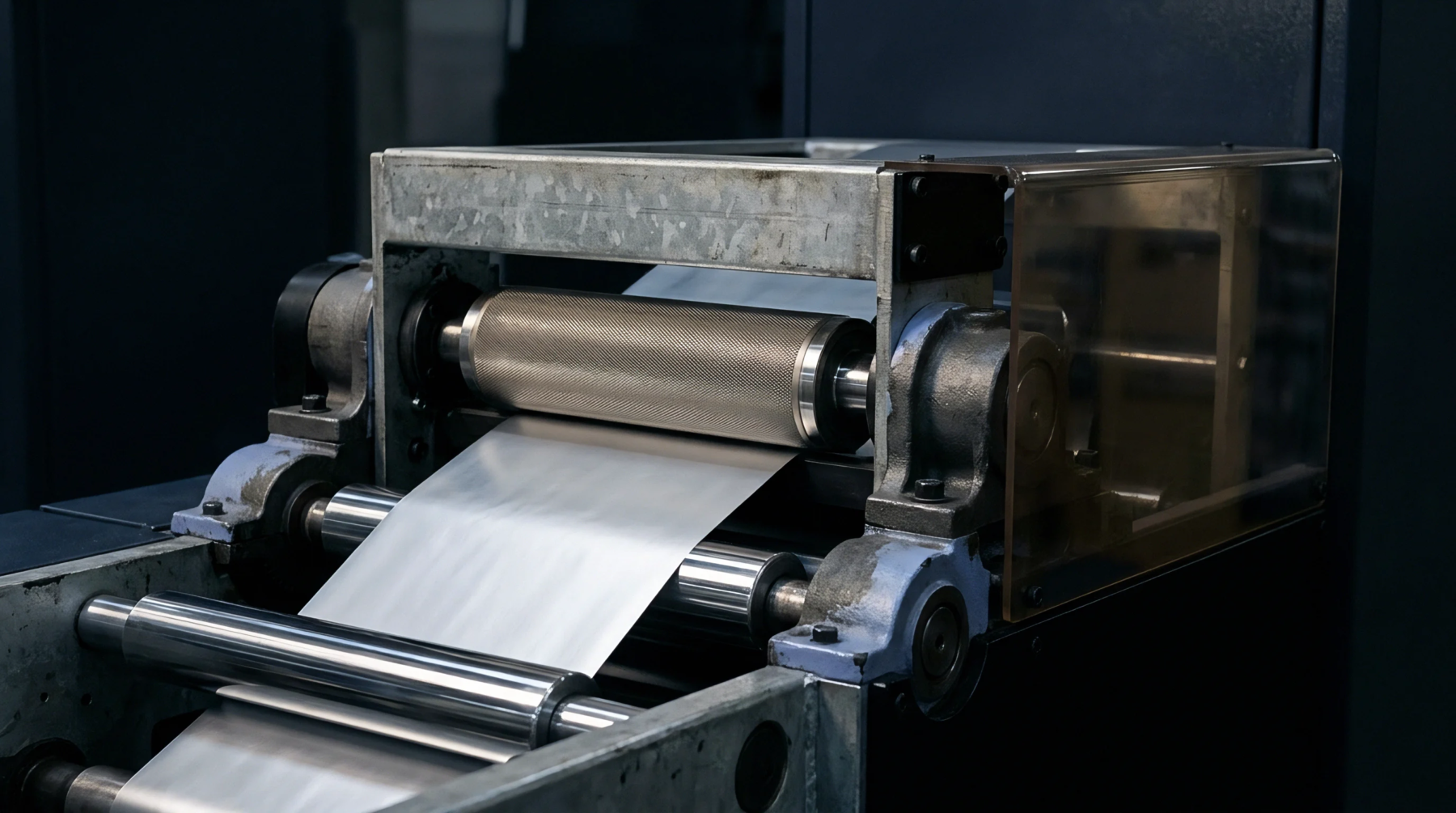
Controlled deposition of these fibrils modifies the topographical profile of a substrate during the wet end phase of production. By applying the material through a spray or size press, mills achieve a smoother finish that accepts ink with higher precision and lower mottle. This layer closes the voids that otherwise cause bleed through in low density sheets.
Precise control over the fibril concentration during application remains the variable that determines opacity and smoothness. High retention rates on the wire ensure that the additive remains within the structure rather than washing away with the whitewater. Operators monitor the hydration state of the pulp to adjust the flow rate, ensuring the resulting web maintains uniform mechanical properties throughout the drying section.
Uniform distribution enables converters to use thinner papers without sacrificing the stiffness required for automatic filling lines.
Barrier Performance
Functional coatings utilizing this network material form a dense film that restricts the migration of moisture vapour across the packaging surface. The process relies on the development of an extremely tight crystalline structure that blocks gas diffusion through the paper matrix. Because the fibrils interlock during the evaporation phase, they eliminate the pathways typically available to air or contaminants.
Such chemical free protection allows for the removal of plastic laminates in certain food packaging applications. The barrier remains effective as long as the structural integrity of the fibrillated layer stays intact. Microfibrillated cellulose enhances the physical performance of high quality print substrates by reducing the required adhesive volume while increasing structural rigidity.