Unheated Warehouse Storage Impact on Multi Ply Boxboard Moisture Equilibrium
Unheated storage alters multi-ply boxboard moisture equilibrium, swelling sheet edges, reducing internal bond strength, and causing severe converting curl.
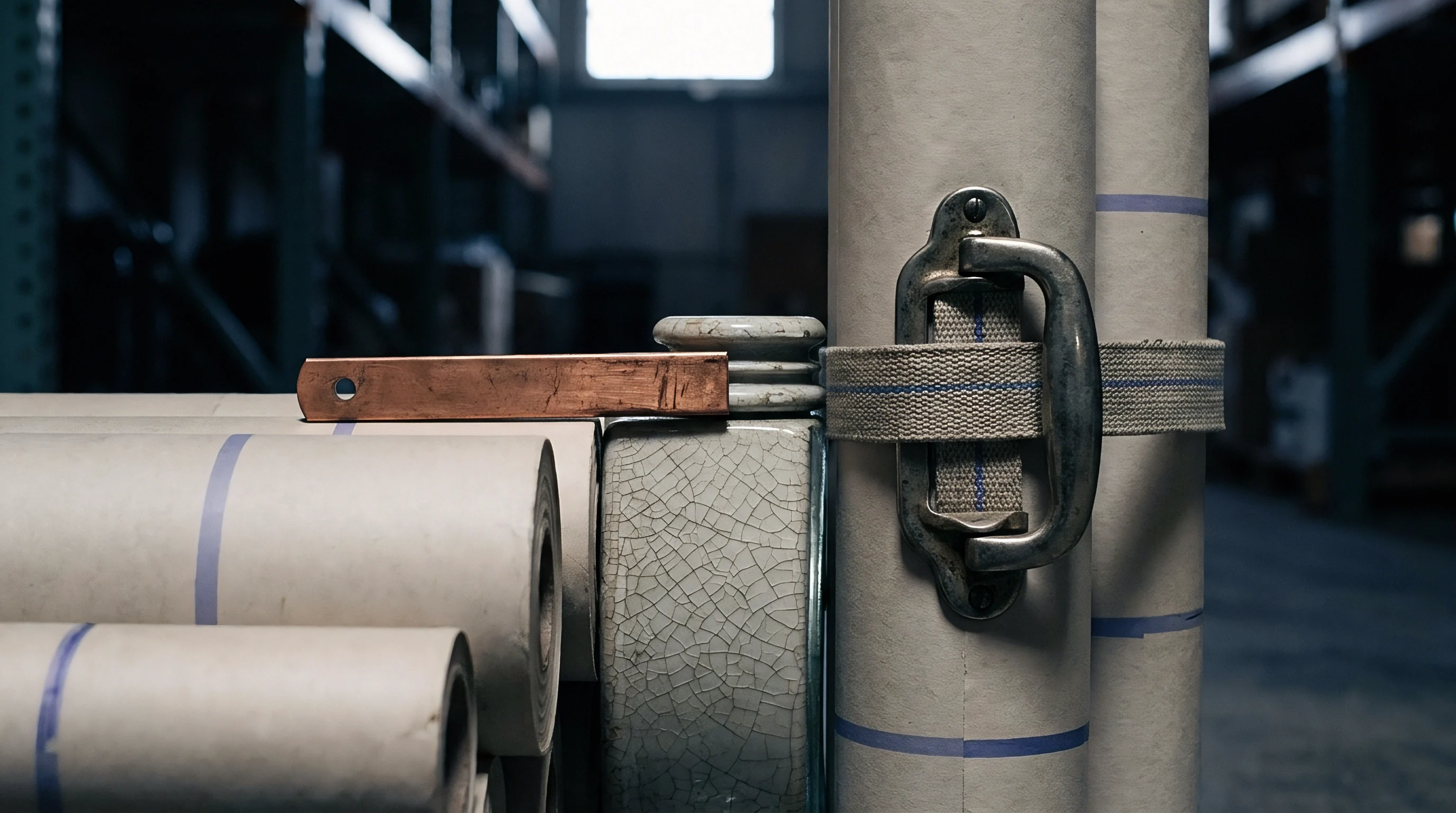
Dock
Pallets left in unconditioned transit spaces absorb atmospheric vapor during rapid ambient cooling. When temperatures fall inside an unheated facility, relative humidity climbs toward saturation, and chilled board draws in water vapor quickly. A mill roll or sheet stack wrapped in polyethylene film holds an isolated microclimate only until seals fail or condensation forms against the wrap.
Multi-ply folding boxboard consists of distinct fiber layers: chemical pulp top liners, mechanical or recycled middle plies, and chemical back liners. Each layer responds differently to moisture depending on its water retention, pore distribution, and processing history.
Autumn and winter storage in unheated space subjects paperboard pallets to prolonged temperature swings. As air around cold stacks reaches dew point overnight, vapor condenses directly onto protective wrapping. Microscopic pinholes in stretch wrap or crushed corner boards let liquid water and humid air seep into the outer ream edges.
Those exposed perimeters expand while the inner stack stays at its original moisture level, setting up internal stresses across the wrapped unit as the margins swell.
Exceeding eight percent total moisture content automatically invalidates mill runnability warranties during high-speed folding box converting.
Substrate failure in cold storage follows predictable mechanical interactions between ambient air and compressed fiber networks, typically showing up in several distinct failure modes:
- Edge wave formation occurs when sheet perimeters absorb ambient vapor while stack centers remain dry.
- Delamination during creasing develops when wet middle layers lose cohesive internal bond strength.
- Blistering in drying tunnels results from rapid steam generation inside moist inner plies during ink curing.
Board held at 5 C in 85 percent relative humidity drifts rapidly from manufacturing equilibrium. Packaging board typically leaves the mill at 6.0 to 7.0 percent moisture content, balanced for pressroom conditions of 23 C and 50 percent relative humidity. In cold, unconditioned storage, board moisture along exposed edges passes 9.0 percent within seventy-two hours.
As sheet edges swell in caliper and cross-direction width, stress builds across the pallet; fed straight onto high-speed print lines, these sheets trigger registration errors and costly press stops.
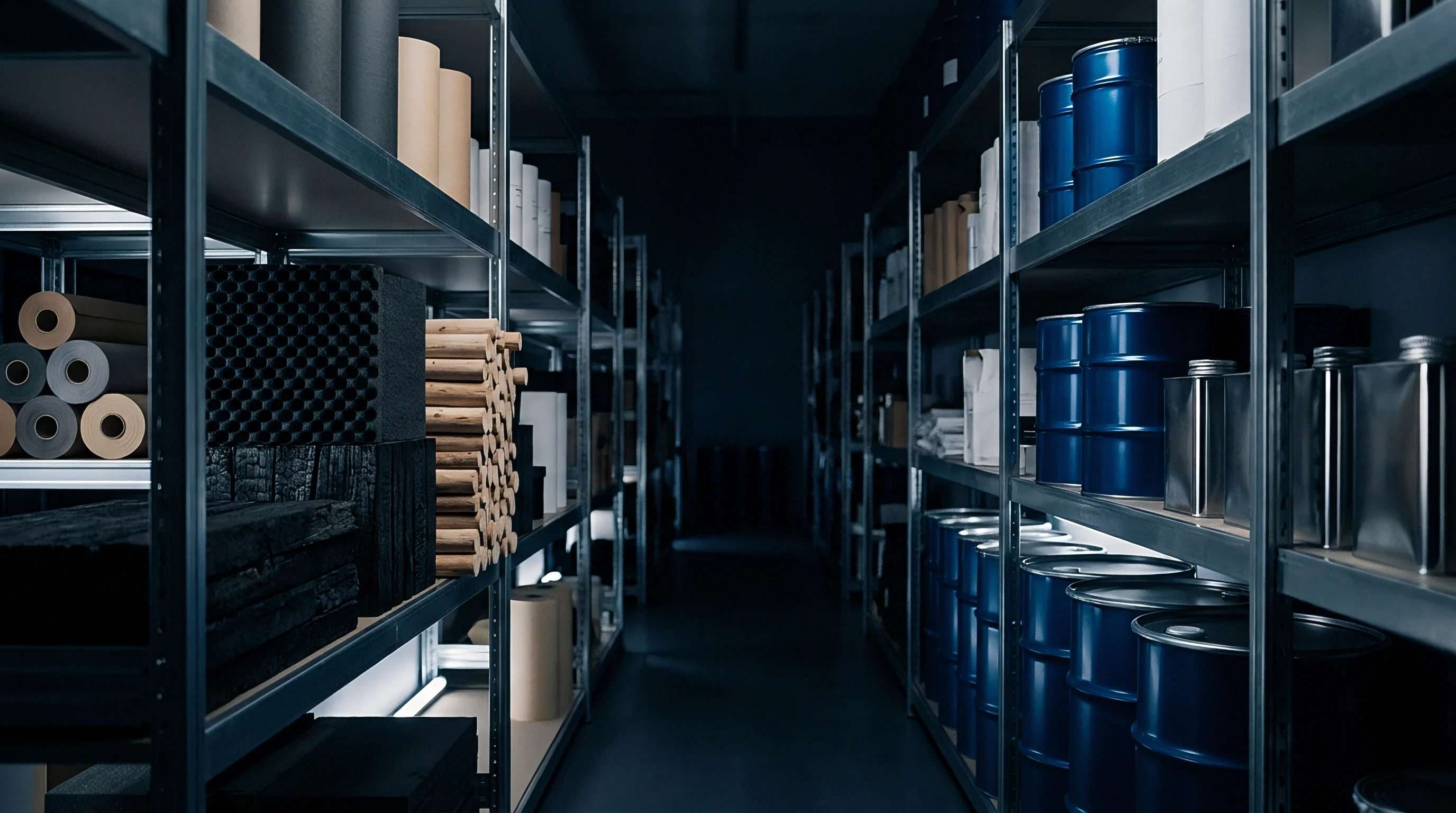
Diffusion
Water vapor enters a paperboard sheet through cut ream edges or tears in stretch wrap. Inside multi-ply boxboard, moisture moves by two main routes: vapor transport through interconnected fiber pores and bound-water diffusion along solid cell walls. Bleached chemical top layers contain purified cellulose fibers with readily accessible hydroxyl groups.
Middle plies of unbleached mechanical pulp retain high lignin levels; this slows initial surface sorption, but the open, porous capillary network allows vapor to penetrate deeply once past the edge.
Absorption rates vary widely across the sheet cross-section. Bleached chemical softwood kraft on the outer faces absorbs vapor quickly but swells uniformly. Inner plies of thermomechanical or chemithermomechanical pulp take up moisture more slowly at first, yet accommodate considerable water volume within bulk fiber voids.
As moisture works inward from ream perimeters, capillary condensation inside the finer pores permanently alters ply adhesion and thickness balance.
| Substrate Grade | Middle Ply Furnish Type | ISO 187 Standard Moisture | Cold Warehouse Moisture | Cross Direction Edge Expansion |
|---|---|---|---|---|
| Folding Boxboard FBB | Chemithermomechanical Pulp | 6.5 Percent | 9.2 Percent | 0.42 Percent |
| Solid Bleached Board SBB | Bleached Chemical Hardwood | 6.2 Percent | 8.1 Percent | 0.28 Percent |
| White Lined Chipboard WLC | Mixed Recycled Fiber | 7.0 Percent | 10.1 Percent | 0.58 Percent |
Caliper increases non-linearly with moisture uptake. Standard ISO 534 testing shows multi-ply board exposed to 80 percent relative humidity swelling up to six percent in total thickness. Recycled middle plies in white lined chipboard take on moisture faster than virgin mechanical pulp, driven by fractured fiber walls and residual starch from repeated recycling loops.
As internal bonding weakens, Z-directional tensile strength drops by twenty to thirty-five percent when local moisture reaches 9.5 percent, significantly reducing resistance to ply separation during high-speed scoring.
Extended storage beyond ninety days in unmanaged atmospheric environments routinely leads to ply separation during converting.
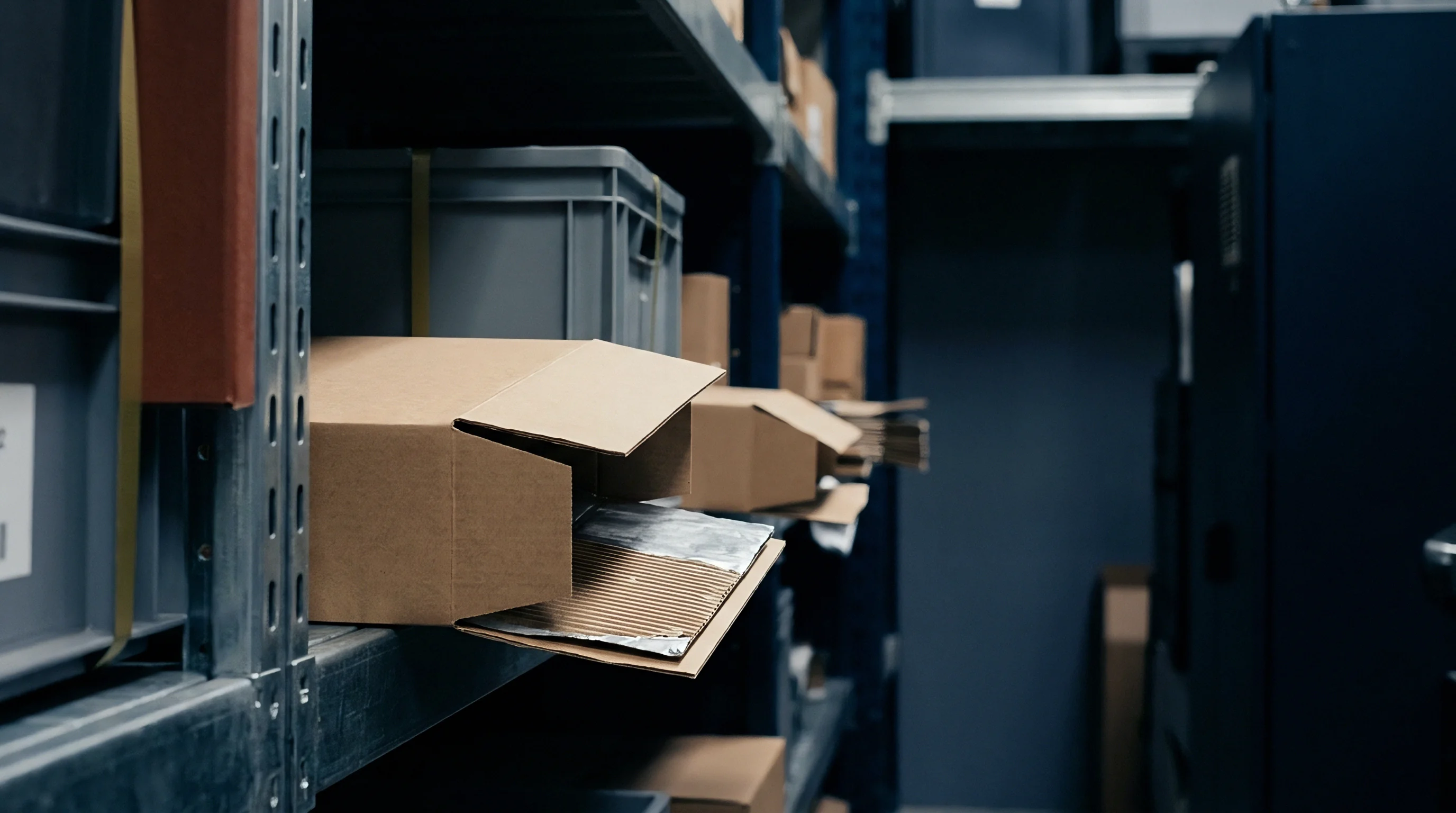
Warp
Cross-direction dimensional growth produces severe panel curvature when moisture gradients develop across individual plies. Differential swelling sets in when the bleached chemical top layer and mechanical middle plies absorb moisture at different rates. When the top plies expand faster than the core, up-curl develops toward the coated surface; conversely, moisture loss in dry air induces down-curl, pulling sheets into a concave shape that halts reliable suction feeding on offset presses.
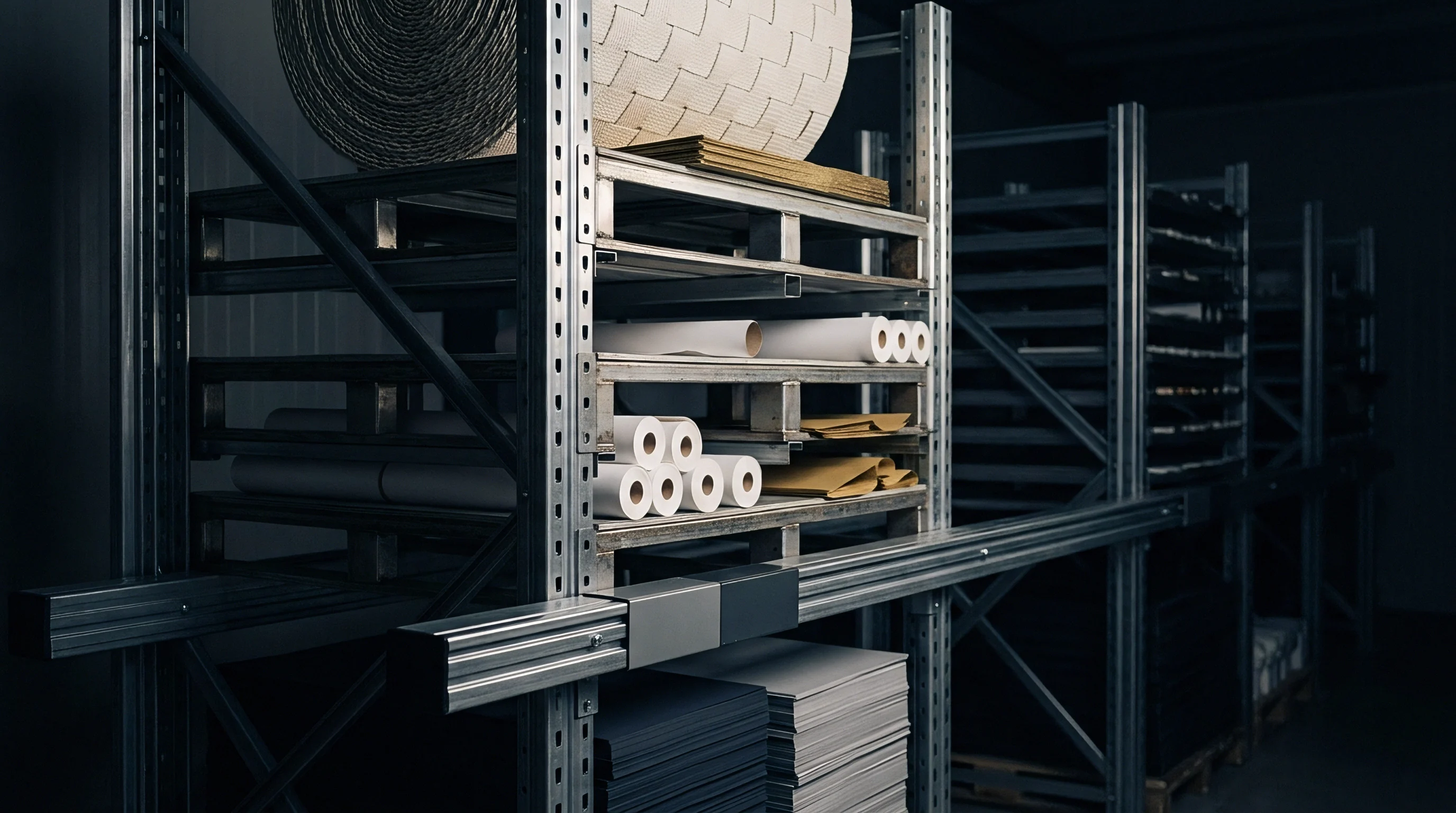
Can Double Coated Folding Boxboard Resist Edge Moisture Penetration in Unheated Storage?
Coated board surfaces retard vapor ingress across the face, but offer no defense against edge absorption along the sides of a pallet. Double- or triple-pigment coatings of calcium carbonate, clay, and styrene-butadiene binders form an effective seal across the top of the sheet, meaning ambient moisture enters almost entirely through exposed cut edges. This concentrated absorption raises perimeter moisture while centers remain at mill equilibrium, generating either tight or wavy edges across the lift.
Cold paperboard opened in a warm pressroom immediately collects surface condensation like glass.
Loss of flatness quickly disrupts converting lines, as unconditioned board jams high-speed feeder heads. Automatic die-cutters depend on tight sheet tolerances to hold registration through cutting, creasing, and stripping stations; deviations greater than three millimeters over a one-meter span misalign sheets against scoring knives, causing outer liners to crack during folding. Plants avoid this by following strict acclimatization procedures before unwrapping incoming board:
- Temperature equalization verification requires checking core pallet temperature with an infrared probe before film removal.
- Pressroom relative humidity tracking ensures the conversion floor stays within five percent of target substrate moisture equilibrium.
- Polyethylene film integrity checks identify tears that allow ambient water vapor influx during storage.
Acclimatization time depends on pallet mass and the temperature gap between warehouse and pressroom air. A two-tonne pallet at 5 C moved into a 23 C pressroom needs forty-eight hours wrapped to reach thermal equilibrium safely. Stripping the film early exposes cold board to warm, humid air, causing immediate surface condensation and irreversible edge wave.
Leaving pallets wrapped until temperatures equalize protects the edges from rapid moisture uptake.
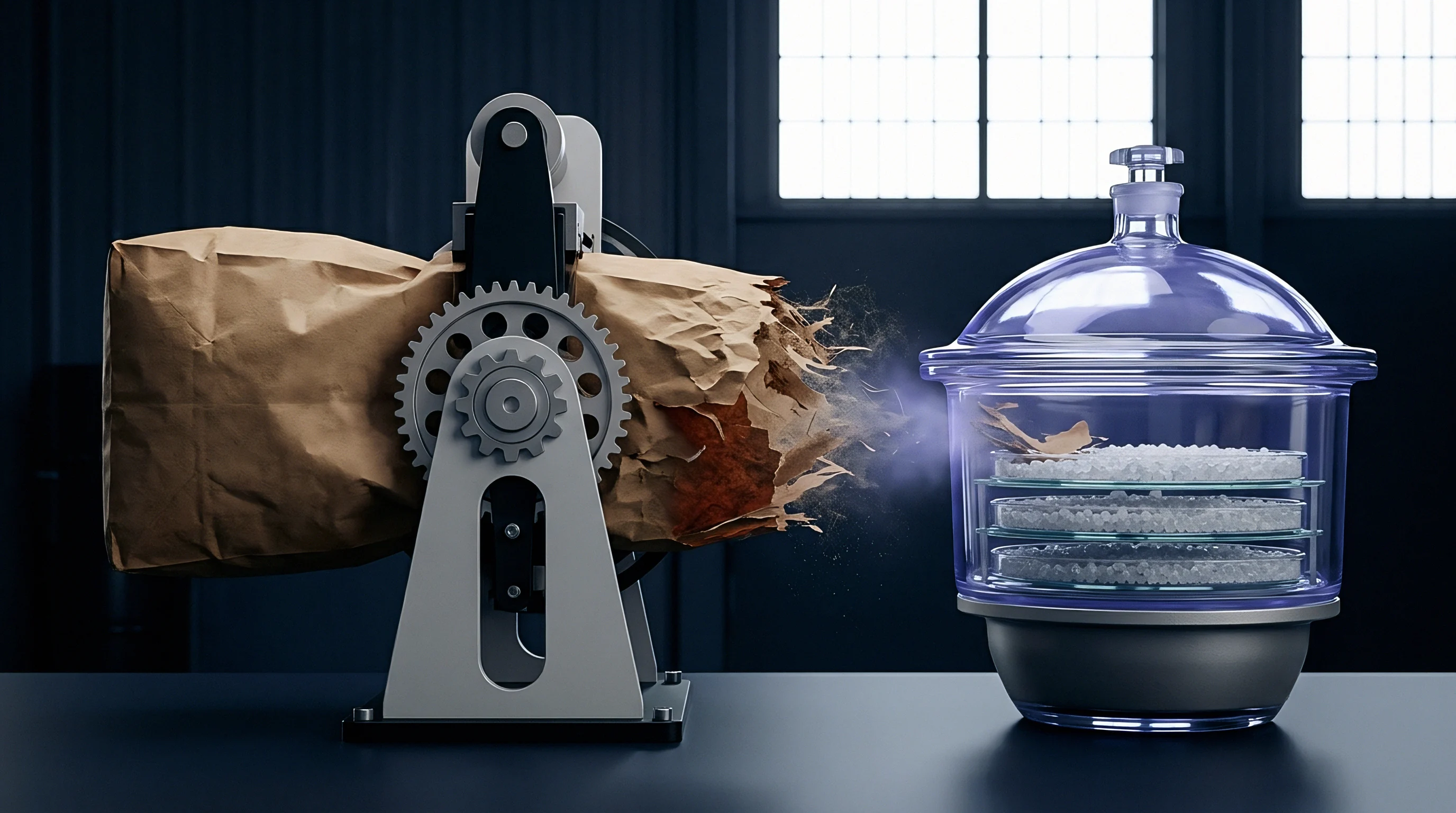
Audit
Receiving inspection verifies substrate condition before mill packaging is breached. Inbound teams check pallet temperature and ambient conditions as soon as stock arrives from cold transit. Handheld infrared thermometers capture surface readings on the top, sides, and pallet underside, while core readings require inserting a narrow probe through the wrap into the stack perimeter.
Any notable spread between core temperature and pressroom ambient requires staging the pallets until temperatures equalize.
Accurate moisture testing relies on strict sampling protocols. Gravimetric oven drying under ISO 287 remains the definitive reference method: technicians weigh samples before and after baking at 105 C until reaching constant mass. Electronic meters offer quick, non-destructive checks on the floor, though they require calibration against specific multi-ply grades and basis weights.
| Test Method | Standard Reference | Operating Principle | Measurement Time | Accuracy Limits |
|---|---|---|---|---|
| Gravimetric Oven Drying | ISO 287 / TAPPI T 412 | Thermal mass loss at 105 C | 4 Hours | 0.1 Percent Moisture |
| Sword Hygrometer Probe | TAPPI T 502 | Equilibrium relative humidity | 3 Minutes | 0.3 Percent Moisture |
| Capacitance Dielectric Field | Internal Field Protocol | High-frequency dielectric shift | 5 Seconds | 0.5 Percent Moisture |
Dielectric contact meters track capacitance shifts driven by water within the fiber network. Because readings depend on substrate density, pinless meters calibrate directly against board bulk in cubic centimeters per gram; high-density solid bleached board registers differently than high-bulk folding boxboard at the exact same moisture percentage. Sword hygrometers instead measure equilibrium relative humidity within internal stack air voids, providing non-destructive readings directly from the ream.
- Remove outer protective stretch wrap from three random pallets per delivered shipment lot.
- Insert sword hygrometer probe into the center of the stack at twenty centimeters depth.
- Record relative humidity and temperature readings after stabilization at two minutes.
- Extract five test sheets from top middle and bottom sections for gravimetric oven drying.
Incoming lots face rejection when moisture falls outside contract tolerances, which typically limit deviation to plus or minus 0.5 percent from target. Elevated edge moisture inflates caliper, degrades crease stiffness, and interferes with ink trapping on press. Under Clause 4.2 of ISO 187, valid reference testing requires continuous climate logging for forty-eight hours beforehand.
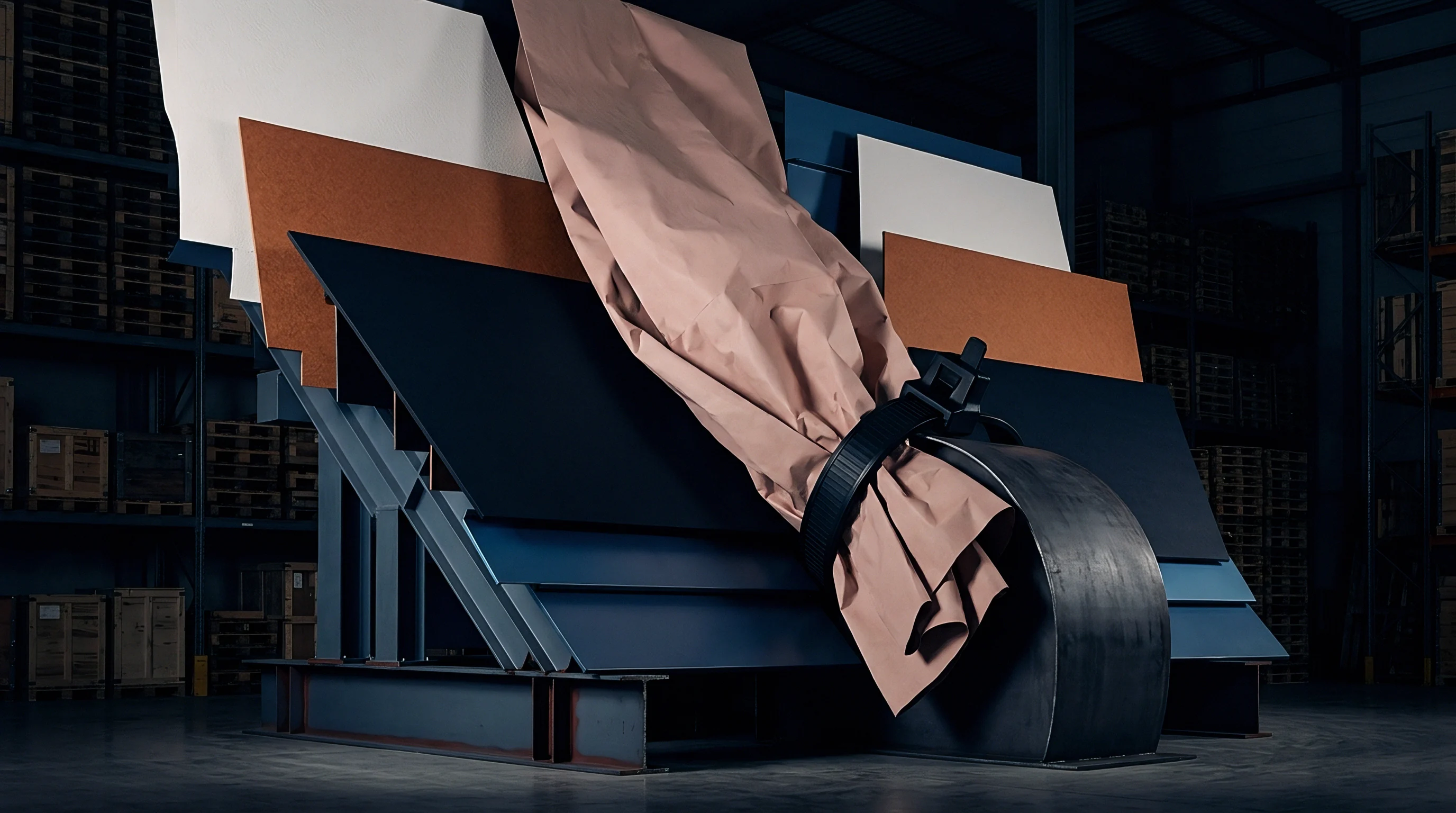
Claim
Commercial claims for moisture damage depend on documented storage logs and sealed sample analysis. Mills routinely decline liability when boxboard sits unmonitored in unheated distributor facilities, citing contract terms that require buyers to inspect incoming pallets and maintain climate logs throughout storage. Proving causation after a moisture shift requires cleanly distinguishing mill manufacturing defects from warehouse exposure.
On a production run using forty tonnes of 300 gram per square meter folding boxboard bought at 1,400 USD per tonne, unconditioned storage might push perimeter moisture from 6.5 percent to 9.5 percent across fifteen percent of the sheet area. The resulting edge wave trips feeder heads, cutting press speed from 12,000 sheets per hour to 6,000 sheets per hour. Accumulating thirty-six hours of lost press time at 250 USD per hour yields 9,000 USD in downtime costs on a 56,000 USD substrate order.
Folding boxboard conditioned at 23 C and 50 percent relative humidity holds an equilibrium moisture content of 6.8 percent.
Rejection claims submitted to substrate mills require rigorous physical proof. Inspectors pull three representative test sheets from deep inside the stack and three from distorted edges, sealing each sample immediately inside moisture-proof aluminum foil pouches. The laboratory then measures moisture content, Z-directional tensile strength under ISO 1924, and Cobb sizing values per ISO 535.
When internal sheets meet target moisture while outer edges run high, mills point to site storage conditions rather than mill defects.
Insurers covering warehouse stock demand evidence of sudden atmospheric events, such as heating equipment breakdowns or roof failures. Gradual moisture absorption from seasonal transitions in unheated facilities generally falls under standard policy exclusions for improper inventory management. Converters protect against this exposure by requiring climate controls in third-party logistics contracts or ordering vapor-barrier foil wrapping for winter stock.
Whether embedded pallet dataloggers can definitively allocate legal liability among carriers, warehouses, and mills remains an unsettled question.