
Creasing Die Geometry Adjustments for Barrier Film Integrity Preservation
Modifying creasing matrix channel width and male rule tip radius prevents polymer film elongation cracking and maintains gas barrier integrity across folded scores.
Modifying creasing matrix channel width and male rule tip radius prevents polymer film elongation cracking and maintains gas barrier integrity across folded scores.
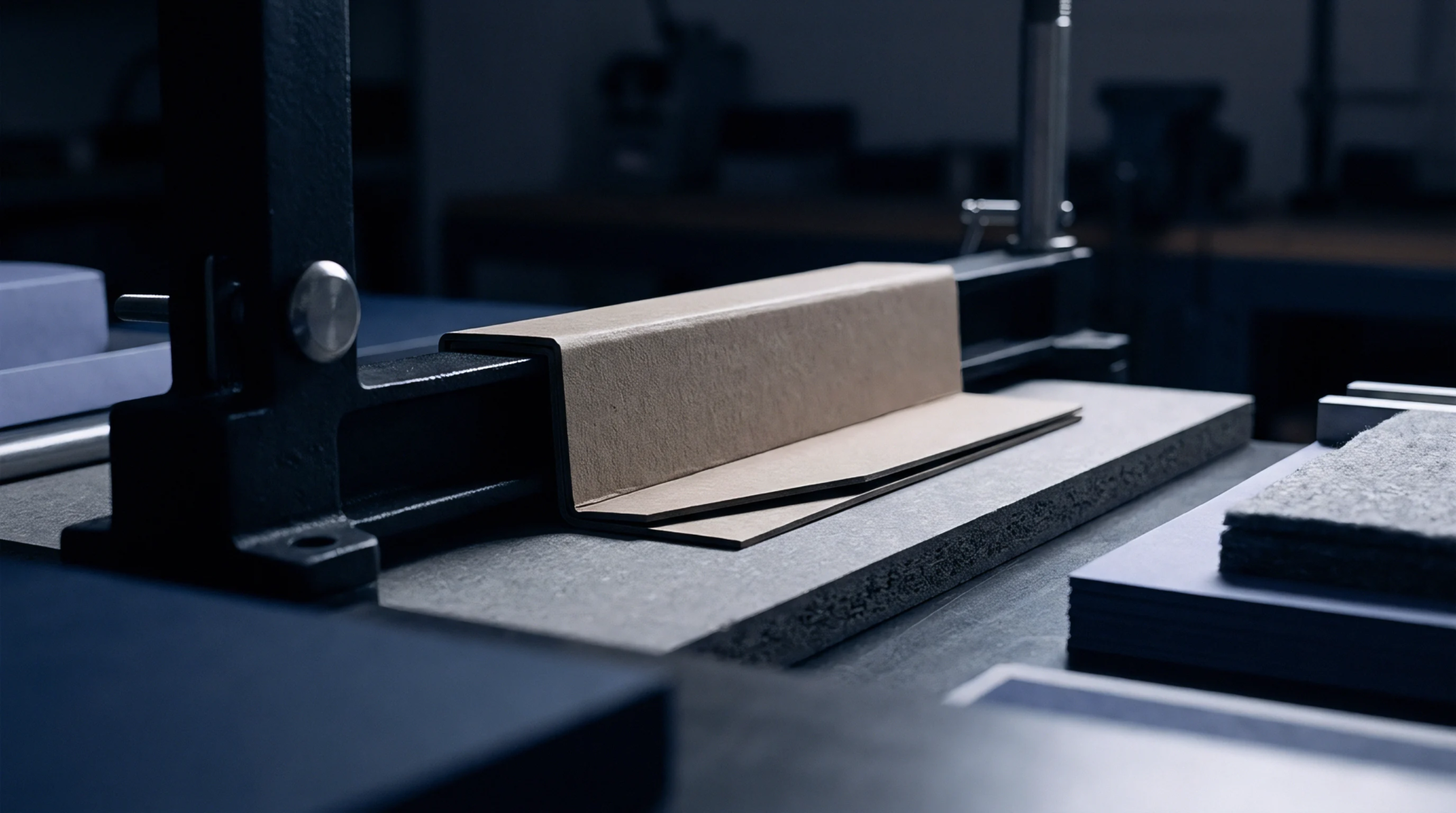
Recycled folding boxboard requires expanding matrix channel width from 1.5 to 1.8 times caliper plus rule thickness to prevent top-liner rupture.
Waterborne dispersion application on folding boxboard requires precise coat weight control, shear-matched viscosity, and staged drying to prevent pinholing.

Cross direction creasing of chemical pulp requires expanding matrix channel width to 1.5 to 1.7 times board caliper plus rule width to prevent liner cracking.
Widening matrix channel width to 1.7 times board caliper mitigates score cracking on recycled board by promoting controlled internal ply delamination.

Selecting steel creasing rules and matrix channels for coated FBB requires matching board caliper and CTMP core shear limits to prevent surface cracking.
Optimizing creasing geometry for barrier board requires expanding female channel width and applying polished male rule radii to prevent barrier film splitting.
Optimize matrix channel clearance using board caliper and rule thickness formulas to guarantee internal ply delamination while preventing outer liner score cracking.
Expertise is a utility, not a secret. sentiention™ publishes its working knowledge as open reference: intelligence layer covering the materials it sources, the markets it enters, and the reference that serves both.