Mechanical Ridge Geometry
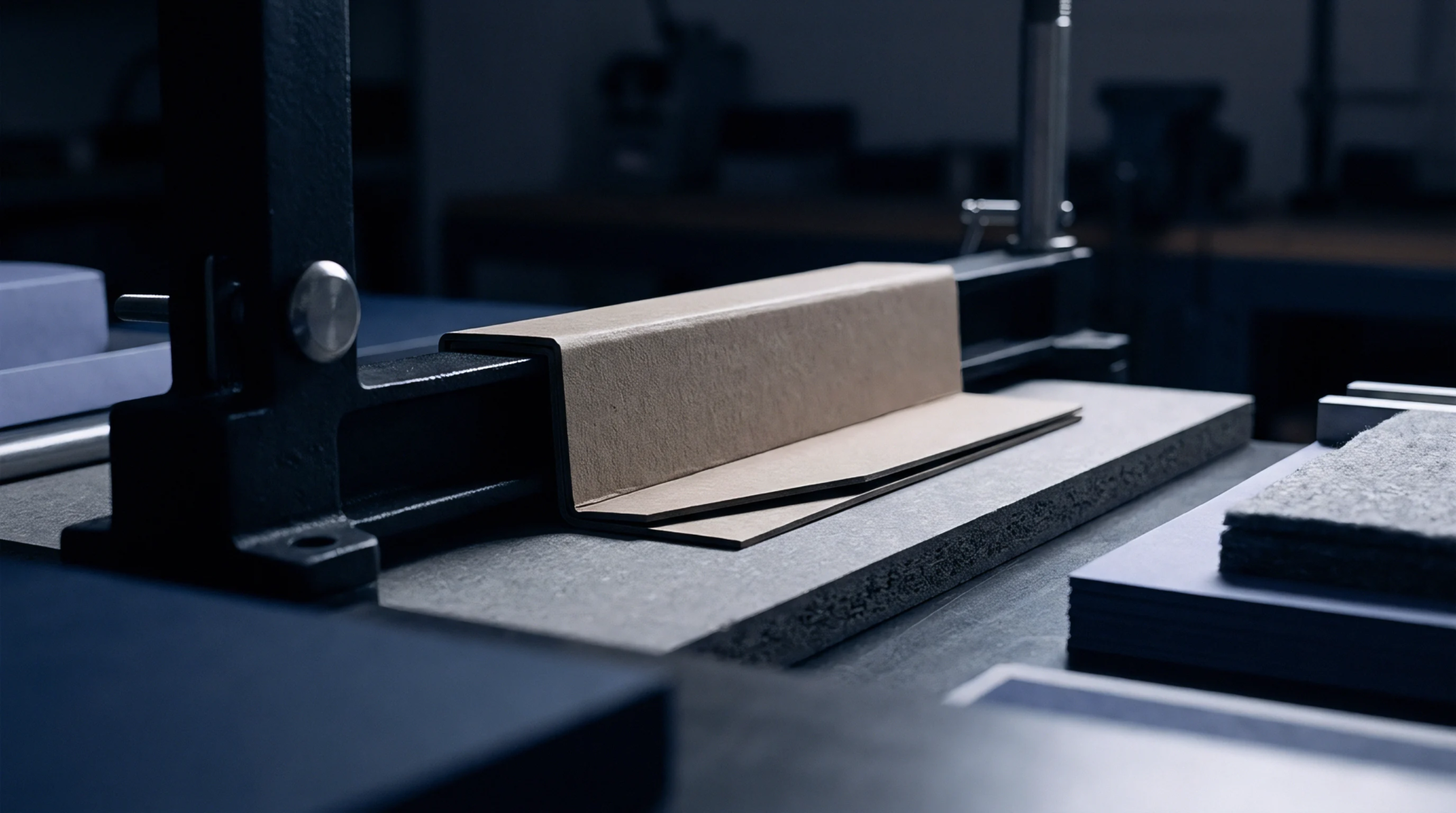
A male creasing rule constitutes the raised steel profile mounted onto the platen or cylinder of a die cutting press to displace substrate fibers into a female channel. This male creasing rule forces the board into a specific shape to create a hinge point without severing the material. Proper calibration of this tool determines the depth and width of the fold line while preserving the structural integrity of the carton blank.
Precision in the height of the metal strip regulates the degree of fiber crush required for folding box board.
Operational Tolerance Parameters
Height consistency across the entire rule length dictates the uniformity of the resulting fold. A variance of one hundredth of a millimeter in the rule profile produces irregular resistance during the machine erecting process. Adjustments to the press pressure settings compensate for board caliper changes but cannot fix a rule that lacks correct height dimensions.
The width of the rule shoulder provides the necessary surface area to prevent the stock from tearing under high tension speeds. Operators monitor the distance between the crease peak and the adjacent cutting edges to ensure that the fold remains centered during the automatic packaging phase.
Material Performance Impact
Dense paper stocks demand a sharper rule profile to prevent surface cracking at the fold line. Thicker substrates require a broader rule to accommodate the increased displacement of fibers during the indentation process. A narrow rule profile reduces the force needed to close the box but increases the probability of mechanical failure at the fold point under stress.
Excessive indentation depth weakens the bond between the board layers and reduces the load bearing capacity of the final package. Proper selection of this geometry ensures the carton maintains its rigidity throughout the transit cycle.